Consumer Unit Installation: What Homeowners Should Know

Introduction: Understanding Consumer Unit Installation
The consumer unit, commonly called the fuse box, distributes electricity to the circuits in your home and houses protective devices. Consumer unit installation can form part of a new installation or replace an existing board when assessment shows an upgrade is appropriate.
This guide from GU Services explains what homeowners should expect before and after the work. We serve residential properties in Woking and within five miles; share the postcode and existing installation details before booking.
An older consumer unit does not automatically require replacement. Its condition, protective arrangements, any defects and planned changes to the home should guide advice. Missing records or concerns about existing wiring may justify an Electrical Installation Condition Report (EICR) before deciding on an upgrade.
The Importance of a Professional Consumer Unit Installation
A consumer unit helps protect circuits, but it is only one part of the electrical installation. Replacing the board cannot correct every defect in existing wiring or accessories. A competent electrician needs to assess the connected installation and discuss remedial work rather than assume a new board alone resolves the concerns.
Homeowners may consider an upgrade where inspection identifies damage, unsuitable protection or insufficient provision for agreed alterations. Do not open the consumer unit, tighten connections or attempt to change protective devices yourself. Incoming connections can remain live even when the main switch is off.
New consumer unit installation should suit the existing circuits and proposed work. Ask why each recommended change is needed and whether it addresses a specific finding or a planned addition; age alone is not a diagnosis.
Components Involved in Consumer Unit Installation
When embarking on a Consumer Unit installation, it’s vital to understand the various components that make up this essential electrical appliance. A typical consumer unit includes several key parts: the main switch, circuit breakers, residual current devices (RCDs), and overcurrent protection devices. Each component plays a crucial role in managing electricity flow and ensuring safety.
The main switch controls the circuits supplied through the board, while circuit breakers provide overcurrent protection. It must not be assumed to isolate incoming connections or other sources of supply. Safe isolation, device selection and electrical work belong to a competent electrician.
Residual current devices (RCDs) respond to an imbalance in current that may indicate leakage to earth. An RCBO combines residual-current and overcurrent protection for an individual circuit. These devices reduce particular risks but do not prevent every electrical injury; suitable selection and testing matter.
Steps in the Consumer Unit Installation Process
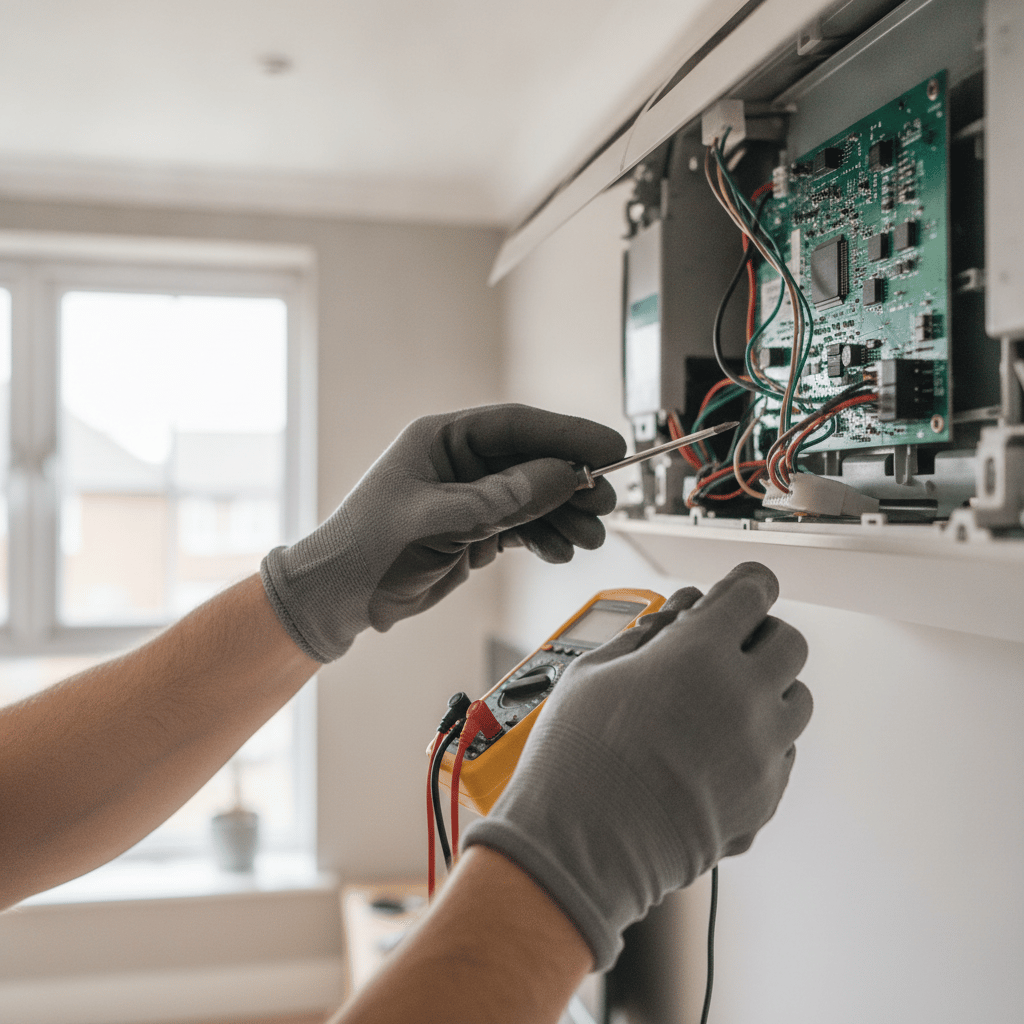
Before work, the electrician assesses the supply, existing circuits, earthing and bonding, access and any known defects. Agree the equipment, necessary repairs and scope of testing. Discuss the planned power interruption, access arrangements and any essential equipment that relies on the supply.
The existing board is removed and the new equipment installed using appropriate safe working procedures. Existing circuits need checking for suitability before reconnection. If further defects emerge, the findings and additional work should be discussed rather than concealed by simply fitting the new unit.
Inspection and testing verify the completed work and connected circuits within the agreed scope. At handover, ask for an explanation of the circuit labels, protective devices and manufacturer user-test instructions. Keep the certification and details of any remaining recommendations with your property records.
Regulatory Standards for Consumer Unit Installation
The work should follow the applicable requirements of BS 7671, the IET Wiring Regulations, alongside the relevant Building Regulations. These are related requirements, not interchangeable documents or a promise that a new board makes every part of an older installation equivalent to new.
A consumer unit installation certificate normally means an Electrical Installation Certificate (EIC), including the relevant inspection and test schedules for the work. It differs from an EICR, which reports on an existing installation's condition. Confirm the documentation to be supplied before work starts.
In England, consumer unit replacement is notifiable Building Regulations work. An installer registered with a relevant Competent Person Scheme can use that notification route; otherwise arrange the appropriate building control process before work. The EIC and Building Regulations compliance documentation serve different purposes. See GOV.UK guidance on notifiable home electrical work.
Common Challenges in Consumer Unit Installation
Limited space, awkward access and cable routes can affect the proposal, especially in older properties. Check the proposed position and access for future inspection before agreeing the work.
Existing wiring or accessories may need attention before connection to the new board. Where circuits are tripping or a specific fault is suspected, electrical fault finding can help establish the cause rather than assume replacing the consumer unit is necessary.
Allow for the possibility of additional findings during inspection and testing. Ask how these will be explained, quoted and agreed, and how they could affect reinstatement of the supply. Do not assume that every installation will involve the same work or disruption.
What affects consumer unit installation cost?
The cost of a new consumer unit installation depends on the circuit count, selected protective devices, access and condition of the connected wiring. Required earthing or bonding improvements, remedial work and any changes to the location can affect the scope. RCD or RCBO arrangements should follow the design and assessment, not price alone.
Ask whether the quote includes equipment, labour, inspection and testing, the EIC and Building Regulations notification. Clarify how additional findings will be handled rather than assume one price covers any repairs identified during the work. No single installation cost applies to every home.
The Lifespan and Maintenance of Consumer Units
There is no single replacement age that suits every consumer unit. Follow the inspection recommendations for the installation and the equipment manufacturer user instructions. Keep labels and records available and raise concerns about damage or changed operation.
Only carry out user checks described by the manufacturer, such as use of a clearly identified test button where instructed. Internal inspection, connection checks and testing require a competent electrician. Repeated tripping or a burning smell needs professional attention; do not repeatedly reset a device to mask a fault.
The inspection findings and subsequent use of the installation should guide ongoing care. Do not assume a consumer unit change includes a maintenance contract or guarantees that faults cannot develop later.
Planning your next steps
Before booking, gather existing electrical records and describe any planned changes or known faults. Ask for a written scope covering the equipment, testing, certification and notification arrangements, with separate treatment of additional work.
Compare proposals on their scope rather than the headline price alone. A clear explanation of the existing condition and recommended work helps you make an informed decision without assuming every home needs the same upgrade.
Contact us with your postcode and installation details to discuss assessment and the proposed work.
For a home in Woking or within five miles, explore our consumer unit replacement service to discuss assessment, upgrade options and the work your installation may need.