Washing Machine Installation: What to Know
Understanding washing machine installation
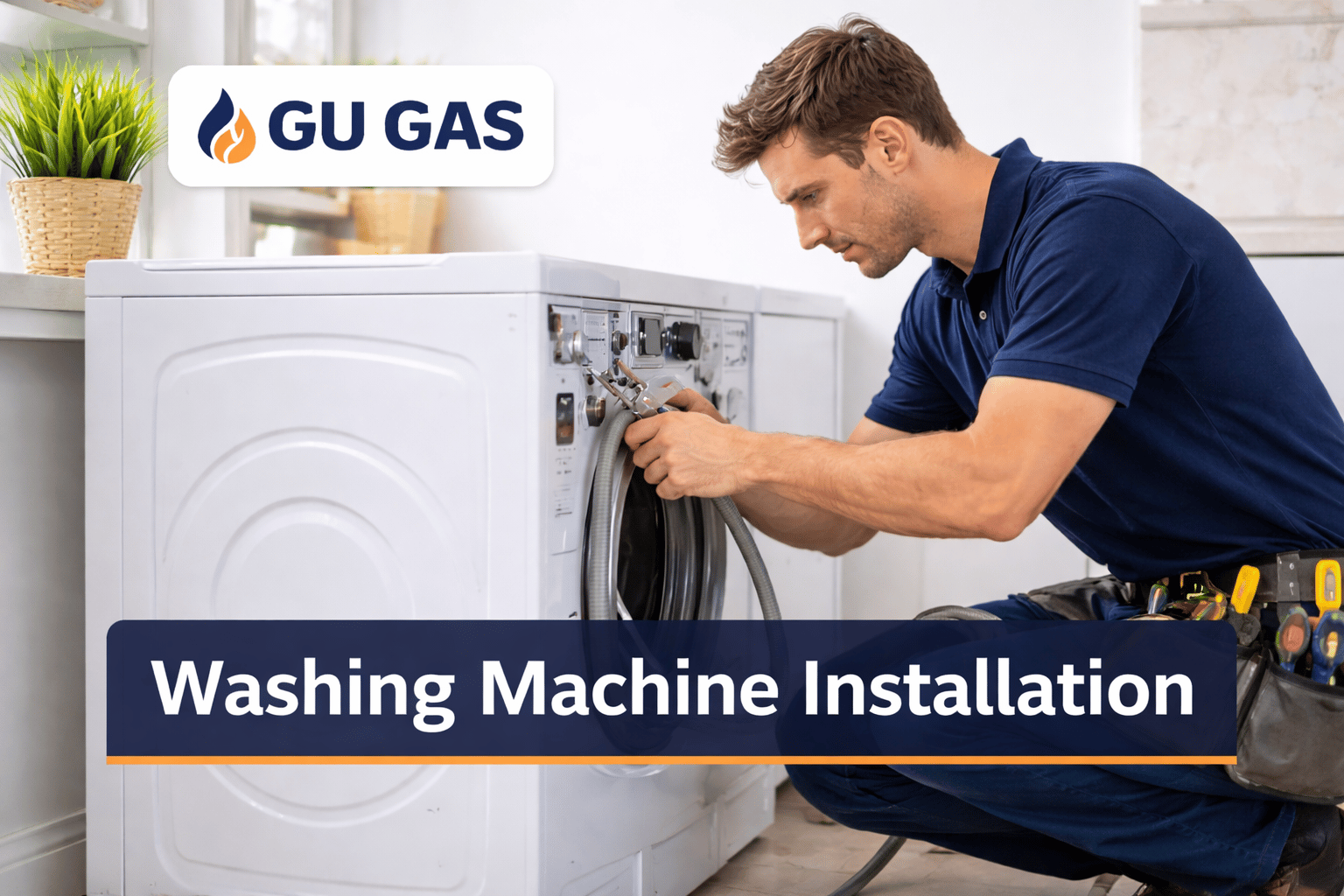
Installation of a washing machine involves more than finding space under a worktop. The plumbing, electrical supply, floor and appliance instructions all need consideration. Assessing the existing connections before the visit helps identify whether straightforward connection work or additional preparation is needed.
GU Services provides domestic installation work in Woking and within a five-mile radius. Share the property postcode, appliance details and existing connections when enquiring. Do not assume appliance supply, delivery, removal of the old machine or disposal is included; confirm those arrangements separately.
Preparing the installation area
Check the appliance dimensions against the available space and access route, including doors and room to open the machine. Have the model-specific installation instructions available and explain any awkward access before booking. Do not try to move a heavy appliance alone or pull it out by hoses or cables.
Floor stability and levelling affect movement and vibration. The installer should follow the manufacturer's positioning, clearance and transit-fixing requirements, then check the machine's stability before use. Do not assume an appliance that fits the opening also has adequate space for connections behind it.
Water supply and drainage connections
The inlet supply, isolation valve and drainage arrangement need to suit the machine instructions and existing installation. Hose routing must avoid trapping or strain, and waste connections must be secure and arranged at the model's specified height. A suitable existing connection should not be assumed from the presence of an old hose alone.
Tell the installer about leaking valves, damaged fittings or previous drainage problems before the visit. Do not force seized valves, improvise hose extensions or alter pipework to make the appliance fit. Where existing household water pipework needs repair, our general plumbing service explains that work; confirm the scope rather than assume it is part of standard appliance connection.
Electrical supply and socket considerations
The electrical connection must suit the appliance instructions and installation. The supply, socket condition and access for isolation need consideration. Do not use an extension lead or multiway adaptor to work around an unsuitable socket position, and do not alter wiring or open electrical covers yourself.
Scorching, a damaged cable, repeated tripping or water near electrical equipment needs professional attention. Keep away from wet connections and do not use the machine until the concern has been assessed. Electrical Safety First's washing machine guidance explains common electrical safety risks.
Positioning, checks and common problems
The installer should complete the connections and checks appropriate to the model, including checking for leaks and observing operation as instructed. Vibration can involve levelling, floor stability, loading or transit fixings; it is not a reason to keep running a machine that moves excessively. Leaks, poor filling or drainage faults also need their cause established rather than assumed to be a new appliance defect.
Follow the manufacturer instructions for any permitted user checks. Stop using a leaking or unstable machine and seek advice. Do not remove panels or attempt internal electrical or plumbing repairs.
Smart features and efficient use
Some machines offer app controls or scheduling. Availability and setup depend on the model, network and account requirements; ask whether any app setup is included rather than assume every installation covers it. Physical connection and safety requirements remain important regardless of smart features.
Good installation supports normal operation, but it does not guarantee lower bills or a particular appliance lifespan. Follow the manufacturer's care, loading and programme guidance after installation.
When professional installation is appropriate
Professional help is particularly useful when connections are missing, damaged or unsuitable, access is difficult or the proposed position needs changes. Discuss these details with GU Gas before booking rather than expecting unplanned alterations during a standard visit.
Clear communication matters: agree the work, additional connection changes and checks in advance. At handover, ask how to use the machine safely, where the normal isolation controls are and whom to contact about problems. Keep the appliance instructions and any relevant installation records.
What affects installation costs?
Access, positioning, the condition of existing connections and additional plumbing or electrical work influence the scope. Ask whether connection materials, testing, making good or any separate removal arrangements are included. Compare quotations for the same work rather than assume one price applies to every home.
If you are buying a washing machine with installation offered by a retailer, check that provider's terms and exclusions too. Delivery and installation can be separate services; neither should be assumed to include modifying unsuitable household connections.
Planning the visit
Contact us with your postcode, appliance model and connection details to discuss the proposed work. There is no need to dismantle equipment or expose wiring to provide that information.
For fitting and connection work at a home in Woking or within five miles, explore our appliance installation service and discuss your appliance and existing connections with GU Services.