How Air Conditioning Systems Work
Understanding how air conditioning systems work helps you make sense of the indoor unit, outdoor equipment and controls. This guide explains heat transfer, the refrigerant cycle and the differences between cooling-only and reversible home systems.
The Science Behind How Air Conditioning Systems Work
In cooling mode, an air conditioning system moves heat from indoors to outdoors rather than creating cold. Refrigerant carries that heat, absorbing it as it evaporates and releasing it as it condenses. Electricity powers the compressor and fans needed to keep the process operating.
Think of the refrigerant as a heat carrier travelling around a closed circuit. Indoor air passes over a heat exchanger and returns to the room cooler. Refrigerant pipework transfers heat between the units; it does not normally bring outdoor air into the room. Ventilation is a separate consideration.
Key Components of an Air Conditioning System
To fully grasp how air conditioning systems work, it's helpful to understand the main components involved. Each part plays a critical role in the continuous cycle of cooling and dehumidification. These components work in harmony to ensure efficient and effective temperature control within your property.
Here are the primary elements you'll find in most modern air conditioning units:
- Evaporator Coil: In cooling mode, the indoor coil receives cold, low-pressure refrigerant containing liquid and vapour. As indoor air passes over it, the refrigerant absorbs heat and the remaining liquid evaporates.
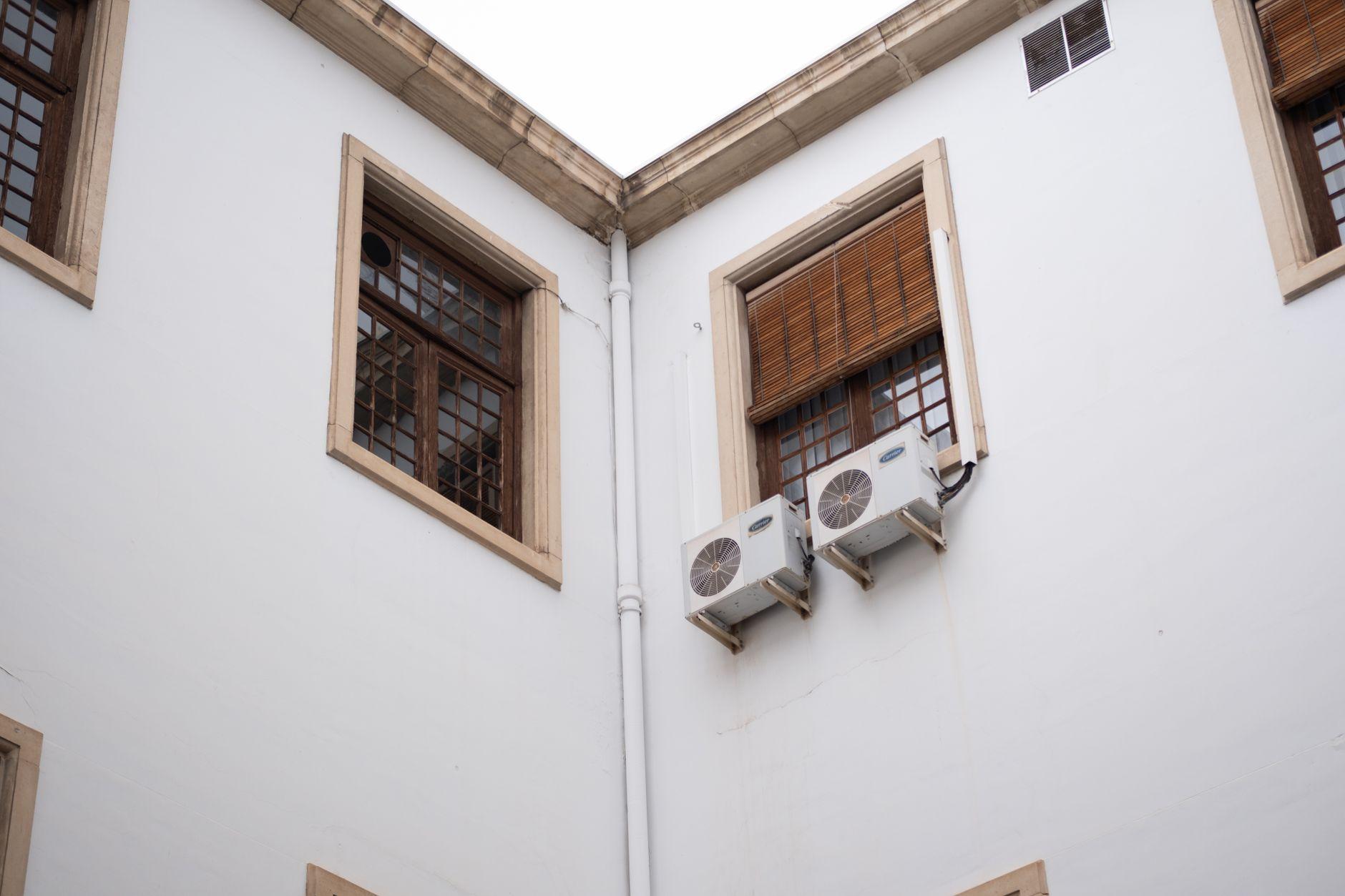
- Condenser Coil: Situated outside, this coil releases the heat absorbed from indoors into the outdoor air. The hot, high-pressure gaseous refrigerant condenses back into a liquid here.
- Compressor: Also part of the outdoor unit, the compressor is the "heart" of the system. It pressurises the gaseous refrigerant, increasing its temperature and moving it through the system.
- Expansion Valve (or Metering Device): This regulates refrigerant flow and lowers its pressure before the evaporator. Some liquid flashes into vapour, leaving a cold liquid-vapour mixture ready to absorb heat.
- Refrigerant: The working fluid that circulates in the sealed circuit and carries heat. Its properties, environmental impact and handling requirements depend on the type; it is not something to add or replace yourself.
- Fans: An indoor fan blows air over the evaporator coil, circulating cool air throughout your home. An outdoor fan blows air over the condenser coil to dissipate heat.
The Refrigeration Cycle Explained
The refrigeration cycle has four main stages. In a typical residential split system operating in cooling mode, the indoor and outdoor components share the following work.
- Evaporation: Warm room air passes over the indoor coil. Low-pressure refrigerant absorbs heat and evaporates, while the indoor fan returns cooler air to the room.
- Compression: The low-pressure refrigerant gas then travels to the compressor in the outdoor unit. The compressor squeezes the gas, significantly increasing its pressure and temperature. This high-pressure, hot gas is now ready to release the absorbed heat to the outside environment.
- Condensation: From the compressor, the hot, high-pressure refrigerant gas moves to the condenser coil, also located outside. As outdoor air is blown over this coil by the outdoor fan, the refrigerant releases its heat into the cooler outside air. As it cools down, the high-pressure gas condenses back into a high-pressure liquid. You might notice warm air blowing out of the outdoor unit – that's the heat being expelled from your home.
- Expansion: High-pressure liquid passes through the expansion device and its pressure falls. Some refrigerant evaporates immediately, producing a cold liquid-vapour mixture that returns to the indoor evaporator. The cycle repeats.
How Air Conditioning Systems Work: Cooling and Dehumidifying
Beyond just cooling, a significant benefit of how air conditioning systems work is their ability to dehumidify the air. High humidity can make even moderate temperatures feel oppressive, creating a clammy and uncomfortable environment. When warm, humid air passes over the cold evaporator coil inside your home, not only does the air cool down, but moisture in the air also condenses onto the cold surface of the coil.
Condensate collects in a drain pan and passes through the drainage arrangement. This can reduce indoor humidity during cooling, but the amount depends on operating conditions. Water leaking from an indoor unit needs investigation rather than being treated as normal drainage.
Different Types of Air Conditioning Systems
While the fundamental principles of how air conditioning systems work remain consistent, there are various types of systems designed to suit different property sizes, layouts, and cooling needs. Choosing the right system is crucial for efficiency and comfort.
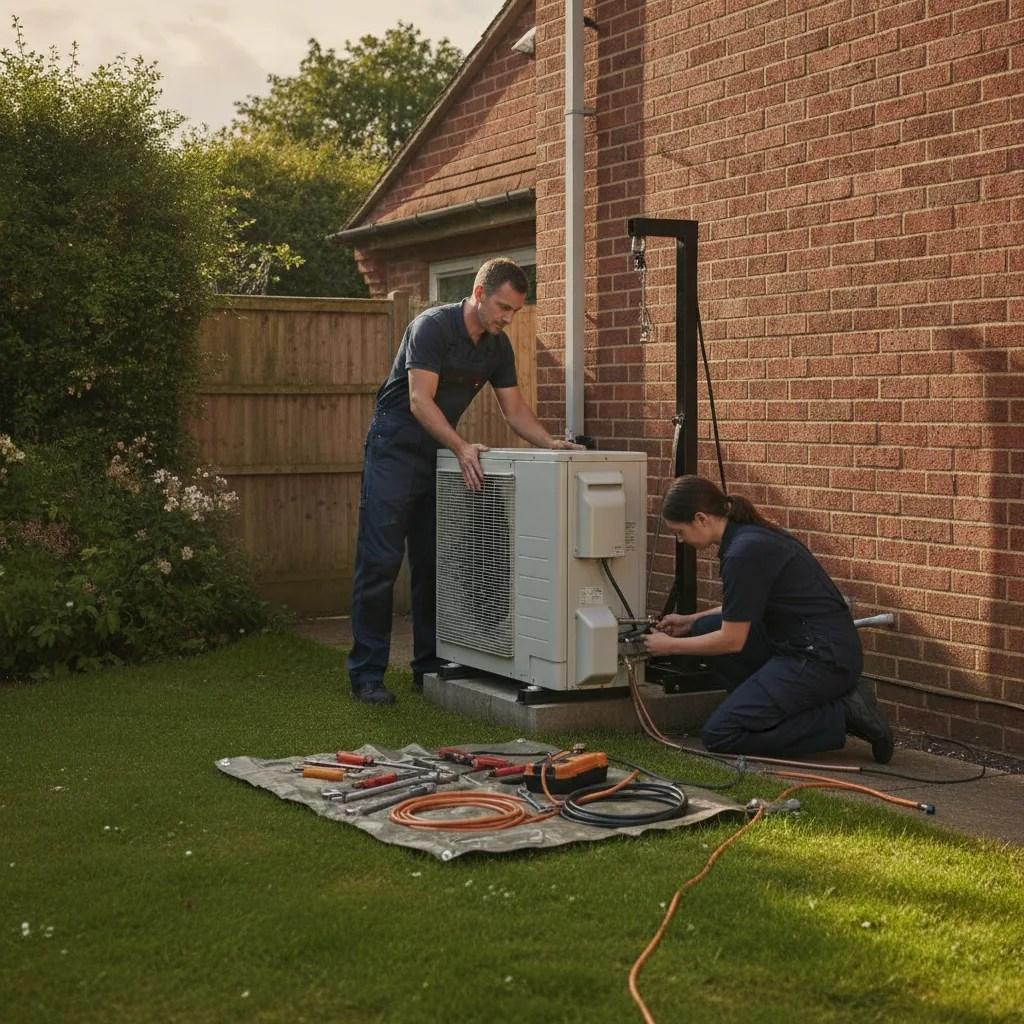
- Single-Split Systems: One outdoor unit connects to one indoor unit through refrigerant pipework. The indoor unit circulates room air, while the outdoor unit houses the compressor and outdoor heat exchanger.
- Multi-Split Systems: One outdoor unit connects to several indoor units. Room controls and simultaneous heating or cooling options depend on the equipment; separate controllers do not mean every room can necessarily use a different operating mode at once.
- Ducted Systems: An indoor unit distributes conditioned air through ducts to the rooms or zones it serves. Suitability depends on space, access and the design; one installation does not automatically cover every room.
- Portable and Window Units: These provide other ways to cool individual spaces. Their arrangement differs from a fixed split system, so positioning, heat rejection and use must follow the equipment instructions.
If you are considering a system for your home, our air conditioning installation page explains the assessment and suitability considerations. GU Services serves residential properties in Woking and within a five-mile radius.
How Does a Heat Pump Air Conditioning System Work?
Some air conditioners are reversible air-to-air heat pumps. In cooling mode they move heat outside; in heating mode the refrigerant flow is redirected so the indoor coil releases heat into the room and the outdoor coil absorbs heat from outdoor air.
Heating is not a feature of every air conditioner. Check the model specification and operating limits. A reversible system transfers ambient heat rather than generating all its warmth with an electric resistance element; performance varies with the equipment, outdoor conditions and installation.
Temperature controls and everyday comfort
A thermostat or temperature sensor compares the measured temperature with the selected setting. Depending on the design, the controls switch operation on and off or adjust compressor output. Mode, fan speed, schedules and sensor position affect how the room feels; selecting a lower temperature does not necessarily cool the room faster.
- Temperature control: Cooling or supported heating modes help manage room temperature within the system capability. Layout, airflow and sizing influence whether the room feels even.
- Filtration: Filters can capture certain particles, depending on the fitted filter and its condition. A standard recirculating split unit is not a substitute for fresh-air ventilation.
- Moisture removal: Condensation on a cold coil can remove moisture during cooling. It does not guarantee that all damp or mould problems in a property will be resolved.
- Convenience: Suitable settings and schedules can help match operation to how a room is used. Features vary by model.
Cooling-only and reversible split systems can look similar, but their supported modes differ:
| Feature | Cooling-only split system | Reversible air-to-air system |
|---|---|---|
| Cooling mode | Moves indoor heat outside | Moves indoor heat outside |
| Heating mode | Not provided by the cooling cycle | Reverses heat transfer where supported |
| Choosing equipment | Check room needs and specification | Also check heating capability and operating limits |
When may professional servicing be appropriate?
Follow the manufacturer maintenance guidance and arrange professional attention for changes such as weak airflow, poor cooling, unusual noise or indoor water leakage. Our air conditioning servicing page explains planned care. Servicing and fault repair are different scopes; do not assume routine maintenance will resolve an existing breakdown.
Does a lower temperature setting mean faster cooling?
Not necessarily. Cooling rate depends on the system output, room conditions and control strategy. Choose suitable settings using the user instructions rather than assuming an extreme setting increases the available capacity.
What is a refrigerant and is it safe?
Refrigerant absorbs and releases heat within the circuit. Different types have specific safety and environmental requirements. Do not open refrigerant connections or attempt charging, leak repairs or electrical work; leave these to an appropriately competent professional.
How long do air conditioning systems last?
Service life varies with the equipment, installation, use and condition. Age alone does not establish whether a system needs replacing. Seek advice about faults and maintenance needs rather than rely on a fixed lifespan.
Can I install air conditioning myself?
Follow the instructions for any permitted user setup of a portable appliance. Fixed split-system installation involves specialist refrigerant and electrical work and should be arranged with an appropriately competent installer. Do not attempt it from a general explanation of how the system works.
Knowing the roles of the coils, compressor, refrigerant and controls helps you describe changes in operation and ask informed questions. It does not replace model-specific instructions or professional diagnosis.
📞 Ready to get started? Call +443335770194 or email info@gu-gas.co.uk.
Find Out More
Explore more of what we do:
Elsewhere: