Common Electrical Problems in Homes | GU Gas Surrey
Common Electrical Problems in Homes (And Why Ignoring Them Is a Terrible Idea)
Electricity is a bit like your internet connection. You barely think about it until something stops working, then suddenly it becomes the most important thing in the house.
If you’ve ever dealt with flickering lights, sockets that mysteriously stop working, or a fuse board that trips every five minutes, you’ve already experienced some of the most common electrical problems in homes.
At GU Gas, we help homeowners across Surrey diagnose and fix electrical faults safely and properly. Some issues are minor. Others are your house politely warning you that something bigger is wrong.
So let’s look at the most common electrical problems in homes, what causes them, and when it’s time to stop Googling and call an electrician.
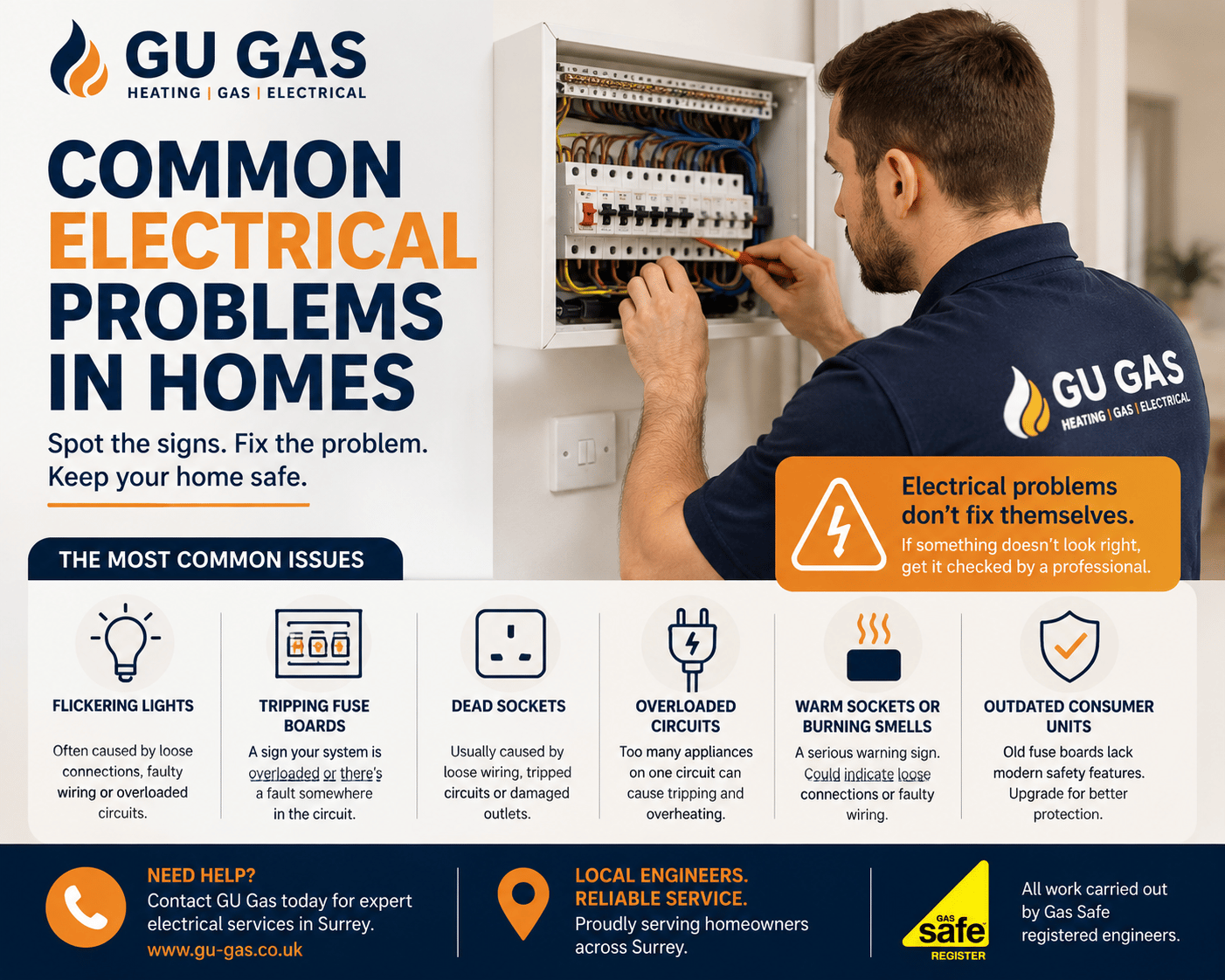
1. Flickering Lights
Ah yes, the classic haunted house starter pack.
Flickering lights are one of the most common electrical problems in homes, and while sometimes it’s just a loose bulb, other times it points to wiring issues, overloaded circuits or poor electrical connections.
If multiple lights flicker regularly, especially when appliances switch on, it’s worth getting things checked professionally.
2. Tripping Fuse Boards
If your consumer unit keeps tripping, your electrical system is basically throwing a tantrum.
This happens when circuits become overloaded or faults are detected. Modern fuse boards are designed to shut power off before dangerous situations occur, which is great… unless it keeps happening every week.
Persistent tripping is one of the most common electrical problems in homes and usually means something deeper needs investigating.
If your fuse board is outdated, our guide on fuse boards in Surrey explains when an upgrade becomes necessary.
3. Dead Sockets
You plug something in. Nothing happens. You try another device. Still nothing.
Dead sockets are frustratingly common and can be caused by loose wiring, tripped circuits, damaged outlets or worn internal components.
In older Surrey homes, this is one of the most common electrical problems in homes because older wiring systems simply weren’t designed for modern electrical demand.
4. Overloaded Circuits
Modern life demands power. TVs, air fryers, gaming PCs, chargers, coffee machines… and somehow we still try running all of it through one extension lead from 1998.
Overloaded circuits are one of the biggest common electrical problems in homes today. Too many appliances on one circuit can cause overheating, tripping, and long-term wiring damage.
Adding additional sockets or upgrading circuits often solves the issue properly.
5. Warm Sockets or Burning Smells
This one’s simple: if something smells like burning, don’t ignore it.
Warm sockets, buzzing sounds or unusual smells can indicate dangerous wiring issues behind the wall. This is one of the more serious common electrical problems in homes and should always be checked immediately.
Electricity should never smell “toasty.” That’s your sign to call someone.
6. Outdated Consumer Units
Older fuse boards often lack modern safety protection like RCDs, which help prevent electric shocks and fires.
If your property still has an old-style fuse box with ceramic fuses, it’s probably time for an upgrade. Modern consumer units are far safer and better suited to today’s electrical usage.
Our consumer unit installation guide explains how modern systems improve electrical safety.
7. Electrical Problems After Appliance Installation
Many electrical faults begin after new appliances are installed incorrectly.
Cookers, washing machines and large appliances often require dedicated circuits or proper electrical connections. DIY installations can easily overload systems or create faults.
If you’re planning upgrades, our guide on appliance installations in Surrey is worth reading first.
Why Electrical Problems Should Never Be Ignored
The problem with many common electrical problems in homes is that they often start small.
A flickering light today becomes damaged wiring tomorrow. A tripping fuse board becomes a complete power outage later. Small electrical faults rarely fix themselves.
That’s why early diagnosis matters. Fixing a minor issue now is always cheaper than dealing with major repairs later.
Why Professional Electrical Work Matters
Electrical systems are not something to “have a go” at unless you genuinely know what you’re doing.
A proper electrician doesn’t just replace parts. They test circuits, identify underlying issues, and ensure everything meets UK safety standards.
If you need broader support, our guide on professional electrical service explains what to expect from qualified electricians.
When Should You Call an Electrician?
You should contact a professional if:
- Your fuse board trips repeatedly
- Lights flicker regularly
- Sockets stop working
- You notice buzzing sounds or burning smells
- Your home has older wiring
These are all warning signs that shouldn’t be ignored.
Final Thoughts
The most common electrical problems in homes are usually manageable when caught early. Ignore them too long, though, and they can quickly become expensive, or dangerous.
If your home is showing signs of electrical issues, contact GU Gas today. Our team provides safe, reliable electrical services across Surrey and can help get everything working properly again.
Because when your electrics start acting strange, hoping for the best isn’t really a strategy.